Quran Majeed – القران الكريم
- 4.7
- Rating
- 10.00M
- Installs
- Free
- Price

 Analysis by App-foxy
When I want a Quran app that feels familiar rather than overloaded with unrelated tools, Quran Majeed – القران الكريم is one of the first options I consider. It belongs to the Books & Reference category, comes from Pakdata, and focuses on making the Quran available in a practical mobile format. I found it most useful when I wanted to read for a few minutes during an ordinary day, not only during a dedicated study session.
The app is free to install and is suitable for Everyone, which makes it easy to recommend to families and people who are beginning to use digital Quran tools. Its store summary also places attention on Ramadan 2026, prayer times, Athan, and a Qibla finder, while the short description presents it simply as Quran Majeed. That combination tells me the app is intended to be more than a digital book, but the Quran remains the reason to install it.
What I would check before choosing it
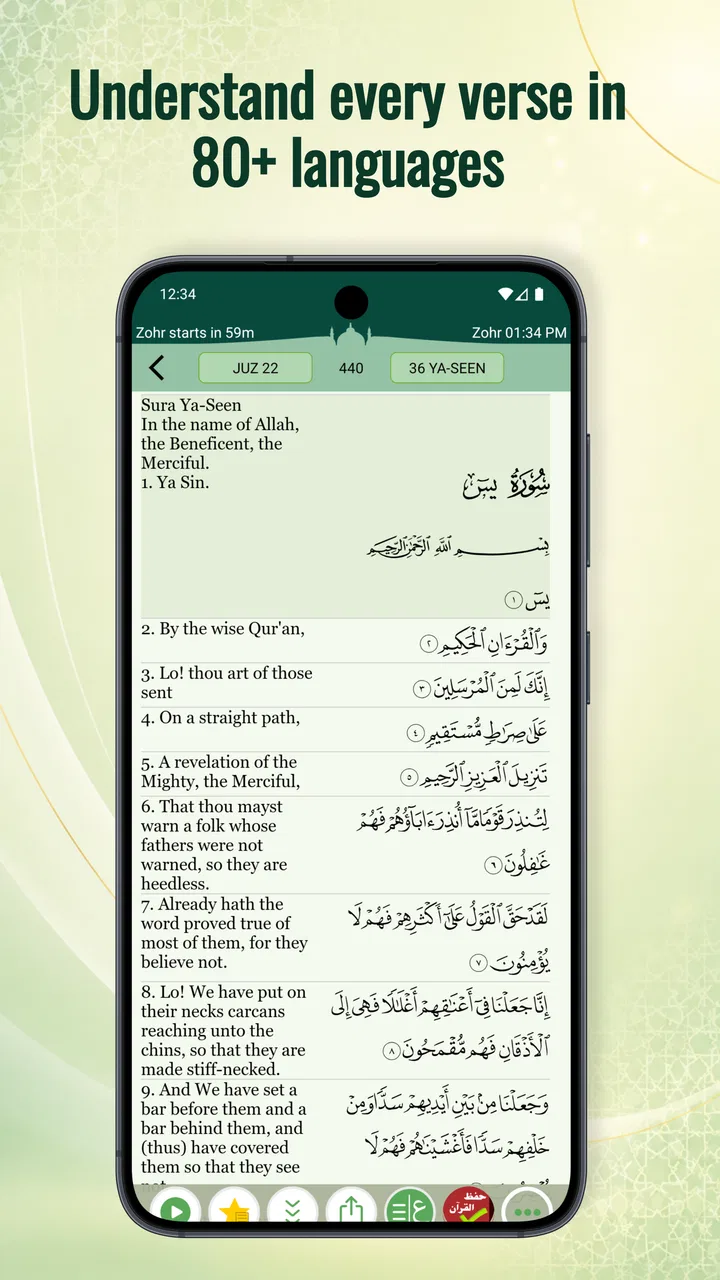
My first decision criterion is reading comfort. A Quran app can contain many useful services and still be frustrating if the script is difficult to read, the controls feel crowded, or returning to a previous place takes too much effort. With this app, I would spend a few minutes checking the page layout, text size, navigation, and any reading preferences before making it part of a daily routine.
You May Also Like

 Pandora - Music & Podcasts
Pandora’s Music Is Easy to Start, but Harder to Recover
Pandora’s strength is its low-effort path from a seed to a station. Its weak spot is how much confidence it asks you to place in connection, setup, and quiet recovery.

 AccuWeather: Weather Radar
AccuWeather Review: A Quick, Clear Forecast for Everyday Decisions
For everyday plans, the best forecast is the one you can understand quickly. AccuWeather makes rain timing, radar, and local conditions easy to act on, with a few trade-offs.

 Hill Climb Racing
Why Hill Climb Racing Still Turns Crashes Into One More Run
A tiny car, a bumpy hill and one more upgrade: Hill Climb Racing keeps resurfacing because its simple chaos makes every near-miss feel personal.

 AliExpress - Shopping App
AliExpress Makes Global Shopping Feel Personal, but Shoppers Bear the Risk
AliExpress turns a global marketplace into a pocket-sized discovery engine. Its reach is useful, its shopping loop compelling, and its trade-offs easy to miss.

 Lords Mobile: Kingdom Wars
Lords Mobile Is a Kingdom-Building Routine, Not a Quick Match
A case-by-case verdict on the building, battles, device demands, and social commitments that make Lords Mobile rewarding for some players and exhausting for others.

 PDF Scanner app - TapScanner
TapScanner Makes Paperwork Easier to Capture, Check, and Share
TapScanner makes scanning with a phone feel less like a rescue operation and more like a dependable step in getting work done. Its capture tools are useful, though not flawless.
More From Our News Desk
View All News


The second criterion is whether I want a focused Quran reader or a broader Islamic companion. Quran Majeed sits between those two choices. It gives the Quran a central place, while its store summary points toward prayer-related tools as well. That is convenient for someone who wants fewer separate apps, although a person who only wants a minimalist reading screen may prefer a dedicated Quran reader with no extra sections.
I also look at how well an app fits different moments. Reading at home, checking a verse during a commute, following a personal schedule, and preparing for Ramadan are not exactly the same use case. A good choice should make the common action—opening the Quran and continuing where I stopped—feel straightforward, while still offering enough surrounding tools for users who need them.
Trust and maturity matter to me too. Pakdata has kept this app available since August 18, 2014, and the current version is 7.9.5. That long presence does not automatically make every screen perfect, but it gives the app the feel of an established product rather than a temporary experiment. It has a 4.7 average from around 1.1 million ratings and more than 10 million installs, so it is clearly used by a large audience.
The technical starting point is also worth checking. The app requires Android 6.0 or later. That covers many phones still in everyday use, but anyone using an older device should confirm compatibility before planning around it. On a supported phone, I would still leave room for updates and test the features I care about before relying on the app during travel or worship.
Reading as a daily habit
The strongest everyday scenario is simple: I have a short break, open the app, read a passage, and close it without needing to prepare anything else. That makes a phone-based Quran practical for people who do not always carry a printed copy. It can also help someone build consistency by keeping the reading material close at hand during quiet moments at home or between errands.
For a new user, I recommend setting up the app around one clear habit instead of exploring every section immediately. First, find the reading view and make sure the text is comfortable. Then learn how to move between surahs or pages and return to the last place read. Only after that would I explore prayer times, Athan, or the Qibla finder. This order reduces the common problem of installing a feature-rich religious app and never settling into its main purpose.
One useful trade-off is screen space. A phone can be more convenient than a book when I am away from home, but it also brings notifications, battery concerns, and the temptation to switch to another task. I would use a quiet reading environment, silence distracting alerts where appropriate, and avoid treating the app as a replacement for every form of study. Its convenience is real, but concentration still depends on how I use the device.
Where this app is particularly strong
Quran Majeed makes the most sense for someone who wants several familiar Islamic utilities gathered around Quran access. The prayer-time and Athan references in its store summary can reduce the need to move between separate apps, while a Qibla finder can be useful when I am in an unfamiliar place. For a traveler, student, or busy household, that consolidation may matter more than having the most stripped-down reading interface.
I also like the fact that its identity is clear. Some religious apps try to cover news, community content, learning, calendars, charity, and many other subjects. This one is easier to understand: begin with the Quran, then use related tools when they help. That makes it less intimidating for a person who wants a dependable starting point rather than a large portal.
The app can also work well for Ramadan preparation. A user may want Quran reading alongside prayer reminders and direction assistance, so keeping those needs in one place can make a routine easier to remember. I would not assume that one app automatically replaces personal planning, but it can serve as the central place I open during the month.
Another strength is accessibility of entry. There is no purchase required just to begin, and the Everyone age rating makes it suitable for a broad household audience. A parent can introduce a child to mobile Quran reading, an older relative can try it without committing money, and a returning user can reinstall it when changing phones without first deciding whether the cost is justified.
Small workflows that make a difference
My preferred workflow is to separate discovery from routine. On the first day, I would inspect the reading controls, prayer-related area, and Qibla tool. On later days, I would open directly into the Quran and use the additional sections only when needed. This keeps the app from becoming a menu that I browse more often than I read.
For travel, I would check the Qibla feature before I actually need it. A tool is most useful when I already understand where to find it and what the result looks like. I would also check prayer information before leaving home instead of waiting until I am in a place with poor connectivity or a low battery. These are ordinary precautions, but they prevent a useful feature from becoming stressful at the important moment.
For shared family use, I would give each person a chance to adjust the reading experience to their own preference rather than assuming one setup works for everyone. A child learning to read, an adult reviewing familiar passages, and someone reading for longer periods may all want different levels of text comfort. The practical lesson is that the app should be judged after personal adjustment, not only from its first screen.
For Ramadan, I would create a modest routine instead of an ambitious one. Reading a manageable portion consistently is more realistic than choosing a schedule that quickly becomes difficult. The app’s broader prayer-oriented tools can support that routine, but I would still decide the amount and timing myself. The software can organize access; it cannot replace personal discipline.
Where another type of app may fit better
A dedicated Quran reader may be a better choice for someone who wants nothing except text and reading controls. If prayer times, Athan, and Qibla direction feel like distractions, a narrower app can provide a calmer experience. I would choose that route for a person who already has trusted tools for prayer and only wants a clean digital reading copy.
On the other hand, a full Islamic lifestyle app may suit someone looking for a wider collection of calendars, educational material, community resources, or additional religious references. Quran Majeed should not be selected simply because it has a long feature list. Its value is strongest when Quran reading is the center and the related utilities are genuinely useful to me.
A printed Quran remains preferable in situations where I want uninterrupted reading without a phone nearby. Paper does not bring notifications, battery anxiety, or the possibility of accidentally drifting into another app. I see the mobile version as a companion for availability and convenience, not as a universal replacement for a physical copy or structured study with a teacher.
Users who need a very specific translation, commentary tradition, recitation experience, or accessibility arrangement should test those requirements directly. A broad audience app may be excellent for general reading while still not matching a specialist’s preferred study method. That is an important distinction: popularity and a strong average rating do not guarantee that every individual’s religious or educational needs will be met in the same way.
Free access, purchases, and the cost of switching
The app is free, which makes trying it low risk. It also lists in-app purchases ranging from $0.99 to $649.99 per item. Because the purchase range is wide, I would avoid assuming that every user needs to buy anything. I would begin with the free experience, identify the exact feature or material I want, and read the purchase screen carefully before confirming.
The real cost of switching is usually not money; it is rebuilding a reading habit. If I move from another Quran app, I may need to learn a new navigation style, recreate any personal routine, and become familiar with where prayer and Qibla tools are located. I would switch when the combined Quran-and-utility approach solves a real problem, not merely because the app has a high rating.
There is also a continuity cost. Before replacing an existing app, I would note where I am in my reading plan and record any personal settings or routines that matter to me. That small step prevents the common frustration of changing tools and then losing momentum. The best app is often the one I will actually open consistently, even if another option looks more impressive.
For someone already satisfied with a separate Quran reader and a separate prayer app, consolidation may not be worth the change. Two familiar apps can be less confusing than one broader app if each already performs its job well. Conversely, a person tired of switching between tools may find that bringing the main needs together is the more valuable improvement.
My recommendation for different readers
I recommend Quran Majeed to readers who want a free, established Quran app with related prayer-oriented tools in the same package. It is especially suitable for everyday reading, travel preparation, Ramadan routines, and families looking for an accessible starting point. The large installed user base and strong average rating support its reputation, while the long-running development history gives me confidence that it is not an abandoned project.
I would recommend starting slowly: open the Quran first, adjust the reading experience, learn the navigation, and then test the Athan, prayer-time, and Qibla sections that matter to you. Do not let the extra tools hide the main reason you installed it. If the reading flow feels natural after several sessions, the app is likely to become useful rather than merely impressive on the first day.
I would steer a minimalist reader toward a focused Quran-only alternative, and I would steer a specialist student toward an app that clearly matches their required translation, commentary, or study workflow. I would also keep a printed Quran available for distraction-free reading. Those are not criticisms of this app so much as honest boundaries around its best use.
Overall, I see Quran Majeed – القران الكريم as a practical middle ground: more capable than a basic digital text, but still centered on Quran access rather than trying to become every kind of religious resource. My clearest recommendation is to choose it when convenience and a connected daily routine matter more than having the simplest possible reader. For that audience, its free entry, broad accessibility, and combination of reading with prayer-related utilities make it a sensible app to try.
FAQs for Quran Majeed – القران الكريم
01What features does Quran Majeed offer for users?
Quran Majeed offers a comprehensive array of features, including multiple translations, audio recitations, and tafsir explanations. Users can also find prayer times, Qibla direction, and Islamic calendar integrations. The app supports bookmarking and note-taking, making it easy to track your reading and reflections.
02Is Quran Majeed available offline?
Yes, Quran Majeed provides offline access to the complete Quran text and translations. Users can download audio recitations for offline use as well. This feature ensures that you can read and listen to the Quran without requiring a constant internet connection, making it convenient for traveling or remote areas.
03How user-friendly is the Quran Majeed app for beginners?
Quran Majeed is designed to be user-friendly, offering an intuitive interface that caters to both beginners and advanced users. The app includes features like adjustable font sizes, night mode, and easy navigation between chapters. New users can easily find guidance through the app’s tutorials and help sections.
04Are there any in-app purchases or subscriptions required?
While Quran Majeed offers a free version with essential features, it also provides premium upgrades through in-app purchases. These premium features include advanced audio options, additional translations, and enhanced customization. Subscriptions or one-time purchases may be required to access the full range of features.
05Is Quran Majeed available in multiple languages?
Quran Majeed supports a wide range of languages for translations, including English, Urdu, French, and more. This makes the app accessible to users worldwide. The interface and user instructions are also available in multiple languages, ensuring ease of use for non-Arabic speakers.
Pros
- User-friendly interface for easy navigation.
- Comprehensive translation options available.
- Audio recitations in multiple voices.
- Bookmark feature for easy reference.
- Offline access to content.
Cons
- Ads can be intrusive at times.
- Large app size may affect storage.
- Limited customization of themes.
- Some translations need improvement.
- Occasional crashes reported.

Quran Majeed – القران الكريم
Gallery